
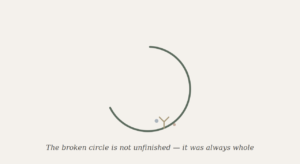
Watts was sharply critical of what he saw as a peculiarly Western obsession: the idea that we are perpetual works-in-progress, forever needing to become a better version of ourselves before we are acceptable as we are. This mindset can quietly turn life into an endless self-improvement project with no finish line, where the present self is never quite good enough.
Buddhist teaching offers a gentler frame. Imperfection is not a problem to be solved; it is simply the nature of being a person. The Japanese aesthetic of wabi-sabi — finding beauty in the cracked, the incomplete, the imperfect — reflects this same spirit. Chronic self-criticism, by contrast, is not a neutral habit. Research on stress physiology links sustained self-directed criticism to elevated inflammatory markers and disrupted sleep, much like the body’s response to external threat. Treating yourself as already whole, even while still growing, is not complacency — it is a measurable act of care toward your own nervous system.