
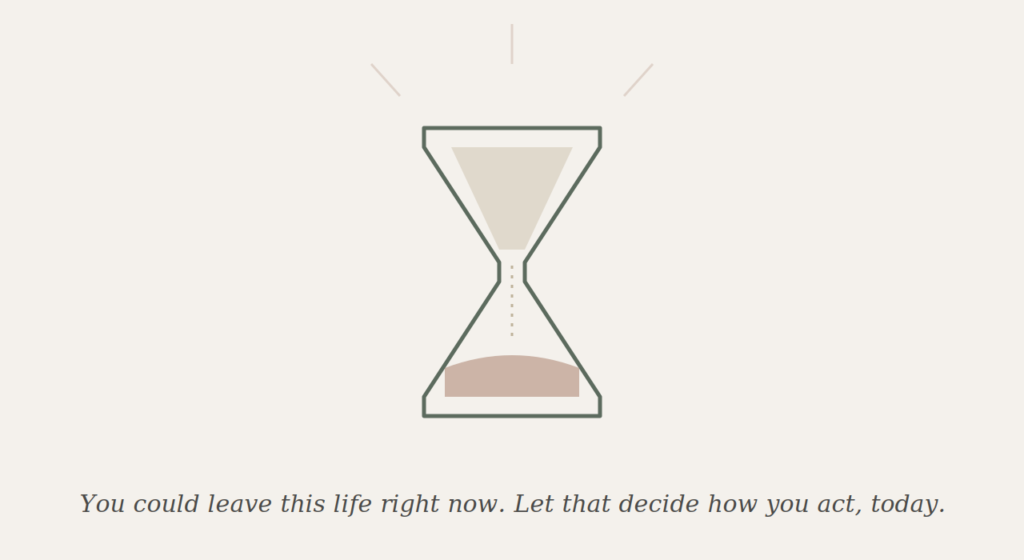
You could leave this life right now. Let that decide how you act, today.
One of the most repeated lines in Meditations is some version of: you could leave life right now — let that determine what you do and say and think. Marcus wrote this not as a man obsessed with death, but as a man trying to stay honest with himself about how little time any of us are guaranteed, and how easy it is to waste that time on things that don’t actually matter — status, irritation, grudges, the opinions of people whose names you’ll forget in a year.
This is the same instinct behind the Latin phrase memento mori — remember you will die — which Stoic philosophers used not to frighten themselves, but to focus themselves. If you knew with certainty that today was your last ordinary day, would you spend it the way you’re about to spend it? Would the argument still feel worth having? Would the procrastinated phone call to someone you love still wait another week?
This isn’t about living in fear of death. It’s about using the fact of it as a kind of compass — a way of cutting through the noise of daily irritations to ask what actually deserves your attention while you have it. Marcus ruled an empire and buried children and fought wars, and the thought that steadied him wasn’t “I have unlimited time.” It was the opposite: I don’t, so let me use today well.
Try this: Before bed tonight, ask yourself honestly: if this had been my last ordinary day, is there anything I would have done differently? Let the answer guide tomorrow, not as guilt, but as direction.